
01
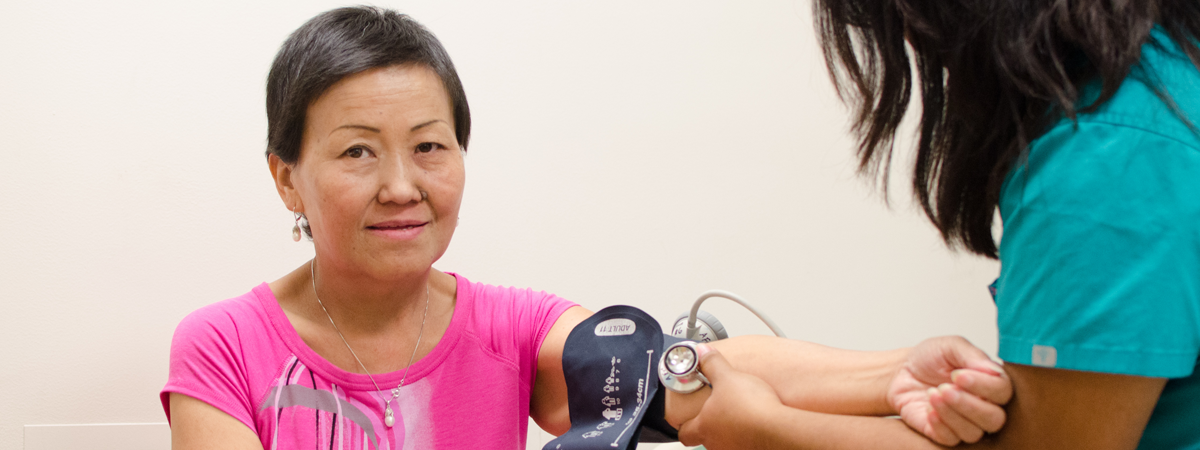
Nutritionist Maya Feller's 5 best health tips for women of color
Americans are risking their health. A lack of nutrition education, exercise and healthy food options has left a brunt of the population vulnerable to heart disease, diabetes and obesity.
These risks are particularly high for women of color.
According to the Centers for Disease Control and Prevention, 45 percent of black women and 49 percent of Latinas are considered obese, compared to 38 percent of white women. Black women are 60 percent more likely than white women to have a heart attack and one-third of Mexican-American women have cardiovascular disease.
Nutritionist and dietician Maya Feller is on a mission to bring those numbers down. Founder of Maya Feller Nutrition, she specializes in risk reduction and management of diet-related chronic illnesses. Her first cookbook, which comes out in October, is called “The Southern Comfort Food Diabetes Cookbook: Over 100 Recipes for a Healthy Life.”
“Most Americans are regularly and consistently eating fast and processed foods at such a clip that has negative, negative health outcomes,” said Feller told NBC News health editor Dr. Madelyn Fernstrom. “So it's really about scaling back. It's about looking for items that are lower in sodium ... It's about changing the proportion.”
Economics are stacked against women of color, and there is no substitution for systematic change. However, there are small steps women can take to help improve their health, and the health of their families.
1. Educate yourself on nutrition.
Nutrition is not an intuitive science, and it’s not taught in schools. By and large, people in America have no idea what they’re putting into their bodies and what the effect may be.
“Especially when we look in these communities of color, that is not part of what's being taught,” said Feller. “They don't know their numbers. They don't know about their blood pressure. They don't know about their lipids. They don't have an idea of the fact that the link between what they're putting into their bodies actually has a clinical outcome with regard to those numbers.”
To compound the issue, many people in the U.S. don’t visit a regular doctor who knows their history, habits, and risks.
“People are using emergency rooms as their primary care. Therefore, there's not this through-line of having a doctor that's following you and also educating you.”
Until these larger societal issues are addressed, women can read nutrition labels and educate themselves on important facts. Nutrition is incredibly complicated, according to Feller, but there are quick hacks to winning the nutrition label game.
“I tell my patients, ‘If you're looking at fat and you're looking at salt, anything that's close to 5 percent is low. Anything that's close to 20 percent is high.’” said Feller. “So if you're using a packaged good, you're always going to want to look for 5 percent, or 10 percent. That's moderate and low, especially in those areas of fat and sodium.”
Feller also recommended a high ratio of leafy greens, as opposed starchy vegetables like yams and potatoes.
“This is where I say, ‘Look at what's on the plate, and look at the ratio. Half the plate as non-starchy vegetable, a quarter is lean protein, and a quarter is starch.’ That's really a great kind of visual mechanism.”
Avoid trans-fats, said Feller. And if you’re eating saturated fat, keep it moderate and plant-based, like avocados and olive oil.
The CDC also recommends high fiber, low added sugar, and low refined carbohydrate intake.
2. Substitute, don’t dismiss
Feller said many women of color are choosy about what they eat, sometimes to their detriment.
“I often hear ‘I'm not going to eat it if it doesn't taste good.’ They're foods that we're accustomed to eating,” said Feller. “Historically, people would make meats and vegetables, and they would be well, well-seasoned. Recently, I would say because of the change in how agriculture and business are linked, we see those foods being made with added sugars, fats and salts.”
Feller suggested making the same dishes, but avoiding additives and making healthy substitutions.
“A lot of my Latino patients ... really love to have the combination of rice and beans. One of the swaps that we did was instead of the white rice, we switched to brown rice and instead of canned beans, we switched to dried beans ... Instead of frying the meat we sauteed it or stewed it. Rather than browning it in sugar, we started with a tomato paste, still sweet, garlic, onion, pepper, and then instead of frying the plantains, we either boiled them or bake them in the oven. So you're getting the same dish, but you're making a switch.”
3. Be active in creative ways.
Feller said women of color are sometimes working two or three jobs and don’t have time for exercise. Their lack of activity also compounds their stress levels, and there's a link between stress, hypertension, and cardiovascular disease, she said.
“There are not enough spaces for people to engage in intentional, safe, physical activity,” said Feller.
However, 30 minutes of physical activity are recommended each day, which might not be realistic for everyone. Feller mentioned some creative suggestions.
“If you're living in an urban center, you can do things like getting off the subway or the bus one stop earlier so you walk, taking the steps rather than the escalator...If you're living in a rural area, I say, ‘Start with 10 minutes of walking. Go at a slow or moderate pace.’ Another thing that also counts is cleaning your own home, right?...I would say washing your dishes might not be an aerobic activity...However, vacuuming your home for 30 minutes in a way and kind of dancing and moving could be aerobic and fun.”
4. Practice sleep hygiene
Sleep is a crucial part of health and stress management, said Feller, and it’s often overlooked. Poor sleep habits can lead to high blood pressure, diabetes, and obesity, according to the CDC.
“You know, there's this idea that sleep is not important. It's incredibly important. It's a time for rejuvenation and rest,” said Feller. “If someone is sleeping four hours a night, usually with my patients I say, ‘Okay, is there a way that we can increase it to six?’ I'm not going to ask for the full eight at the top...So maybe during the week, I'll say, "Okay, aim for six.’ And on the weekend, I'll say, ‘Aim for seven. [Take] small steps.’”
5. Model good nutrition for the family.
Women of color sometimes live in neighborhoods that lack healthy grocery stores, according to Feller. This means their children are primarily exposed to establishments like dollar stores that sell highly processed foods. This, along with a lack of nutritional education, leaves children especially vulnerable to negative influences. A good diet, however, can be modeled by a family member.
“Usually there is the primary caregiver. It could be a mom, a grandmother, even a father, aunt, uncle. Once they decide to kind of make that change about what's going to be on the plates of the people in the family, we see it trickle down. If we can educate the elders and the people that are serving the food, then the children and folks underneath are more likely to engage in positive eating behaviors.”
Know Your Value editors, writers and experts take care to recommend items we really like and hope you’ll enjoy! Just so you know, Know Your Value does have affiliate relationships. So, while every product is independently selected, if you buy something through our links, we may get a small share of the revenue.
02
Wild Women, Lots of Booze & Healthy Eating: The Secrets to Living a Long Life, According to People Over 100
Secrets to Living to 100 | PEOPLE.com Top Navigation Close View image
Wild Women, Lots of Booze & Healthy Eating: The Secrets to Living a Long Life, According to People Over 100
this link is to an external site that may or may not meet accessibility guidelines.
03
Jenna Jameson just shared a ton of advice about how to get started on the keto diet.
She's lost more than 80 pounds since starting the high-fat, low-carb diet last year.
She says she follows other keto dieters, like Vinny from Jersey Shore, on Instagram for inspiration.
Get rid of processed stuff. “Clean out your refrigerator and cupboards, get rid of everything processed, high in carbohydrates, [and] high in sugar,” Jenna wrote, noting that there are lots of different names for sugar, like high fructose corn syrup.
Buy keto-friendly foods. “My number one recommendation for grocery shopping is to shop the perimeter and not the [aisles],” Jenna said. “Green leafy veggies, grass fed steaks, wild salmon. Eggs and real butter are your friend.”
Talk to your family about your keto lifestyle. “Get them on board! You all can benefit from it!” Jenna said. “I usually make a side of brown rice or pasta for my toddler. If your significant other doesn’t want to participate, ask them to respect your wants and needs and to not try to break your willpower.”
Be positive about the whole thing. “This shouldn’t be torture. Focus on how you’re now treating your body right and be proud!” Jenna said.
Think long-term. “Keto is sustainable and will benefit your mind as well as your physique,” Jenna said. (Worth pointing out: A lot of experts say keto is not easy or sustainable to follow for the long-term.)
Follow fellow keto fans on Instagram. Jenna said her favorite is @ketoguido, aka Vinny Guadagnino from Jersey Shore.
Be patient. “Everyone’s body reacts differently,” Jena said. “I lost my first 40 lbs ultra quick then plateaued and had to begin #intermittentfasting to break that wall.”
Don’t stress over keto side effects. The keto flu is real, but Jena said you shouldn’t “fear” it. Instead, “Drink plenty of electrolytes, salt your food and get rest!” she said.
Search for nutritional info online. “Google is your friend! If you are wondering about carb content... it’s a quick google away,” Jena said.
Read labels. “You’ll be surprised how many products hide potato starch,” Jena said.
Jenna Jameson Just Posted A Keto Diet Before-And-After Photo Along With Her Tips For Beginners
Jenna Jameson has practically been a spokesperson for the keto diet for more than a year, and there’s a good reason for it: She’s lost about 80 pounds on the diet.
While Jenna has dropped some amazing keto wisdom here and there on Instagram, she just shared a massive list of tips on how to start your keto lifestyle in a new post, pointing out that “how do I start a keto lifestyle” is the No. 1 question she gets asked.
Here’s her advice:
View this post on Instagram
The number one question I get asked is “How do I start a #keto lifestyle” Tip 1 - clean out your refrigerator and cupboards, get rid of everything processed, high in carbohydrates, high in sugar (remember there are many different names for sugar, namely high fructose corn syrup) Tip 2- Go shopping! This is the fun part! My number one recommendation for grocery shopping is to shop the perimeter and not the isles. Green leafy veggies, grass fed steaks, wild salmon. Eggs and real butter are your friend. Tip 3- discuss your lifestyle change with your household and get them on board! You all can benefit from it! I usually make a side of brown rice or pasta for my toddler. If your significant other doesn’t want to participate, ask them to respect your wants and needs and to not try to break your willpower. 4- Have a sunny outlook! This shouldn’t be torture. Focus on how you’re now treating your body right and be proud! 5- be in it for the long haul. Keto is sustainable and will benefit your mind as well as your physique. 6- Follow fellow Keto kings and Queens on IG. My favorite is @ketoguido 7. Be patient... everyone’s body reacts differently. I lost my first 40 lbs ultra quick then plateaued and had to begin #intermittentfasting to break that wall. 8. Don’t fear the #ketoflu , drink plenty of electrolytes, salt your food and get rest! 9. Google is your friend! If you are wondering about carb content... it’s a quick google away. 10. Always... always read labels! You’ll be surprised how many products hide potato starch 👊🏻 also remember my keto favorite snack list on amazon is found by clicking the link in my bio 🥩
A post shared by Jenna Jameson (@jennacantlose) on Aug 20, 2019 at 4:03pm PDT
So, if you’re looking to start a keto diet…you know what to do.
Korin Miller Korin Miller is a freelance writer specializing in general wellness, sexual health and relationships, and lifestyle trends, with work appearing in Men’s Health, Women’s Health, Self, Glamour, and more.


0 Comments:
Post a Comment